Tiger nut boilies: how to use tiger nut flour in a homemade mix
In this guide
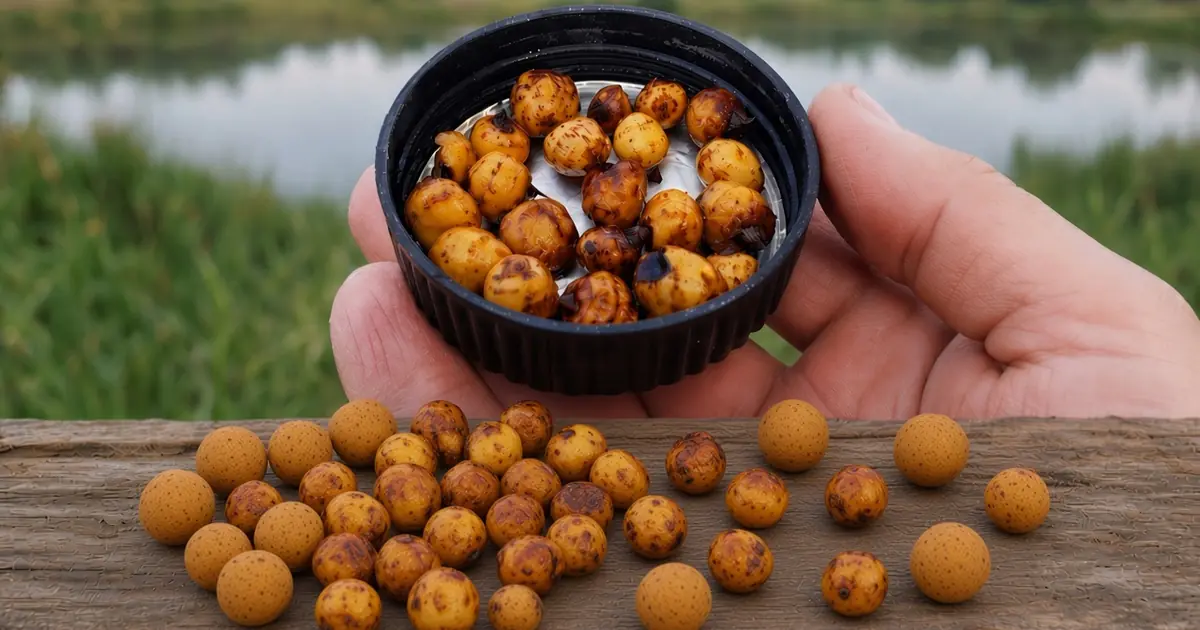
Tiger nut boilies take one of the oldest carp baits around and put it into a round, rollable bait. The flour gives the mix a sweet, nutty smell and plenty of natural oil, but it binds poorly, so the real question is how much you can add before the paste starts to fall apart. This guide covers the dose, the partners that hold it together and a 1 kg tiger nut recipe with every gram and percentage written out.
New to making bait? Our boilie recipe for beginners walks through mixing, rolling and boiling from scratch, so here we can stick to the tiger nut side.
Key takeaways
- The BoilieFormula library puts tiger nut flour at 5-20% of the dry mix, with 10% as a typical dose and 30% as the absolute maximum.
- It brings sweetness, oil and fibre, but only weak binding. Back it up with semolina, soya flour and a little egg albumen.
- The example recipe uses 15% tiger nut flour in a 1000 g dry mix. Eggs and nut flavour are listed separately, in eggs and ml per kg.
- Whole tiger nuts are a separate job. Never use them dry: soak and boil them properly first.
- Roll a small test batch before you commit a full kilo.
What tiger nut flour does in a boilie
Tiger nuts are not really nuts. They are the small tubers of a sedge, and that is why the tiger nut flour entry in our ingredient library lists no declared allergens. The library groups the flour as a carbohydrate, fat and fibre source that also sweetens the mix and adds attraction. Its rough estimates are about 24% fat, 18% sugars, 15% fibre and only 5% protein, though every supplier grinds and dries the nuts differently.
On the bank that translates into a few things you will notice:
- Smell and taste. It scores 8 out of 10 for natural attraction, mostly from its natural sugars and nutty oil.
- Oil. With around a quarter fat, it softens the paste and makes it feel greasy if you overdo it.
- Weak binding. It rates only 4 out of 10 for binding and 3 for hardening, so it needs help to hold a skin when you boil.
- Low protein. It adds very little protein, so the protein in a tiger nut boilie has to come from its partners.
To see how it sits next to other flours and meals, our guide to boilie base mix ingredients compares the main options side by side.
How much tiger nut flour to use in tiger nut boilies
Keep it within the library range of 5-20% of the dry mix. Inside that range the bait behaves like this:
- 5-10%: a nutty background note. The paste rolls much like a normal birdfood or semolina mix.
- 10-15%: tiger nut is clearly the main character. This is where most homemade tiger nut boilies end up, and where the recipe below sits.
- 15-20%: a heavy tiger bait. The paste gets oilier and shorter, so you will need firm binders and a careful boil.
Above 20% the mix is hard to balance, and 30% is the hard ceiling in the library. Pushing past it gives you a paste that cracks while you roll and baits that split in the pan, not a stronger bait.
What to pair with tiger nut flour
Because tiger nut flour is sweet and low in protein, it sits naturally in a birdfood or milk-protein style mix. These partners from the library suit it, with their recommended ranges:
- Egg-biscuit birdfood (5-30%, typical 15%). Opens the texture and adds an eggy, sweet base that goes well with tiger nut.
- Semolina (10-35%, typical 22.5%). The main binder here. It scores 7 out of 10 for binding and makes the paste smooth.
- Defatted soya flour (5-30%, typical 15%). Adds protein and binding without piling more oil on top of the tiger nut.
- Calcium caseinate (3-15%, typical 7.5%). A milk protein that binds and hardens well, which helps an oily paste hold together.
- Sweet whey powder (2-15%) and sugar (1-10%). Small amounts lift the sweet side and add some quick leakage.
- Nut flavour (2-10 ml per kg of dry mix, typical 5 ml/kg). Optional. Measure it carefully, as the library notes that overdosing a flavour can make a bait less attractive.
Egg albumen powder (1-7% of the dry mix) is worth a small spoonful too. It scores 10 out of 10 for both binding and hardening in the library and makes up for the weak grip of the tiger nut flour.
Warning: If you also feed whole tiger nuts, never use them dry. Soak them for at least 24 hours, then boil them until they are fully swollen, because unprepared tigers keep taking on water after a fish eats them. Many fisheries ban tigers or allow them only when properly prepared, so check the rules first. The flour itself has no declared allergens, but this mix contains gluten, egg, milk and soya.
1 kg tiger nut boilie recipe
This example uses 15% tiger nut flour in a sweet birdfood base. Every amount sits inside that ingredient's range in the BoilieFormula library. The table covers the dry mix only, which comes to 1000 g.
| Ingredient | Amount (g) | Percentage | Purpose |
|---|---|---|---|
| Tiger nut flour | 150 g | 15% | Nutty smell, natural sugars and oil |
| Semolina | 300 g | 30% | Main binder and a smooth paste |
| Egg-biscuit birdfood | 250 g | 25% | Sweet base and a more open texture |
| Defatted soya flour | 150 g | 15% | Protein and binding without extra oil |
| Sweet whey powder | 50 g | 5% | Sweetness and some quick leakage |
| Calcium caseinate | 50 g | 5% | Protein, binding and a firmer skin |
| Egg albumen powder | 30 g | 3% | Extra binding for the oily flour |
| Sugar | 20 g | 2% | A touch more sweetness |
| Total dry mix | 1000 g | 100% |
Wet ingredients per 1 kg of dry mix, added separately and not part of the percentages above:
- Eggs: the library range is 7-11 eggs per kg, with 9 typical. Start with 8 and add the last one or two only if the paste needs it.
- Nut flavour (optional): 5 ml, which is the typical library dose. Whisk it into the eggs.
Remember that these figures describe the dry mix. Once you add eggs, boil the baits and dry them, the finished boilie has a different make-up and weight.
Note: Tiger nut flour varies a lot. Some is fine and floury, some is coarse and very oily. If your paste feels greasy or cracks, drop the tiger nut to 10% and add the difference to semolina.
How to make tiger nut boilies step by step
- Weigh all the dry ingredients and mix them thoroughly. Rub out any lumps of tiger nut flour, as the oil makes it clump.
- Crack the eggs into a separate bowl and whisk in the nut flavour if you use it.
- Add the dry mix to the eggs bit by bit and knead into a firm paste that no longer sticks to your fingers.
- Leave the paste to rest for 10-15 minutes. Tiger nut flour soaks up liquid slowly, so the paste often firms up while it sits.
- Roll sausages, then cut and roll them into baits by hand or on a rolling table.
- Boil a few baits first and break one open. If the skin is soft or the bait splits, add a little more albumen or semolina to the rest of the paste before boiling the full batch.
- Spread the baits on a tray or in an air-dry bag until the skin feels firm.
Tip: For a first go, make only 200-250 g of dry mix. You will soon see how your tiger nut flour rolls and boils, without binning a whole kilo if it needs adjusting.
How to store tiger nut boilies
The oil in tiger nut flour can go stale over time, which spoils the fresh nutty smell. Once the baits are dry, bag them in amounts you will use in one session and freeze them. Take out only what you need for each trip, and do not refreeze leftovers that have sat in a warm bucket.
Hookbaits and other variations
Tiger nut flour scores 0 for buoyancy in the library, so it will not make a bait float on its own. If you want a nutty pop-up to fish over the boilies, our guide to pop-up boilies explains which ingredients actually make a hookbait rise.
The flour rates 7 out of 10 for cold water and 8 for warm water, so it can stay in all year. For baits that break down faster in summer, push the birdfood and whey up and cut the boil time. Our guide to soluble boilies covers that approach in more detail.
If you would rather keep a fish base and add tiger nut only as a sweet extra, the method is the same as in our krill boilies guide. Keep the tiger nut at the low end, around 5-10%, so it does not fight the fishmeal.
Common tiger nut boilie mistakes
- Too much flour. Above 20% the paste turns oily and short. Stay inside 5-20% and add sweetness with whey or sugar instead.
- Not enough binder. If baits split in the pan, raise the egg albumen a little (up to 7%) or swap some birdfood for semolina.
- Expecting it to carry the protein. At about 5% protein it adds almost none. Use soya, caseinate or birdfood for that.
- Heavy flavour on top. The flour already smells strongly. Keep added nut flavour within 2-10 ml per kg.
- Mixing up the units. Dry ingredients are in grams and per cent of the dry mix. Eggs are counted per kg and flavours in ml per kg, so do not add them to the 100%.
Tiger nut boilie checklist
- Pick a tiger nut flour dose between 5 and 20% of the dry mix.
- Add semolina, soya flour and a small amount of albumen or caseinate to bind it.
- Check the dry mix adds up to 1000 g and 100%.
- Keep eggs and flavours out of the percentage column.
- Soak and boil any whole tigers properly and check the venue rules.
- Roll and boil a small test batch first.
- Dry, bag and freeze the finished baits.
How BoilieFormula can help
With an oily, low-protein ingredient like tiger nut flour, a few per cent either way changes how the paste rolls. In BoilieFormula you can enter the recipe above and see the percentages, an estimated nutrition profile and the cost per kilo, plus warnings when an ingredient goes outside its usual range. A good free starting point is the Birdfood Mix template: open it in the calculator, add tiger nut flour and watch how the balance shifts.
The free plan includes unlimited calculations and three saved recipes. Pro adds the ready-made Tiger-Nut Mix along with the other extra recipe templates, unlimited saved recipes, detailed scores, version comparisons, a testing journal and custom ingredients. You can see what Pro includes on the pricing page.
Frequently asked questions
How much tiger nut flour should I put in a boilie mix?
The BoilieFormula library range is 5-20% of the dry mix, with 10% as a typical dose. Most homemade tiger nut boilies sit between 10 and 15%. Never go above 30%, which is the absolute maximum.
Can I make boilies from tiger nut flour only?
No. It binds poorly, carries a lot of oil and has very little protein, so a pure tiger nut paste crumbles and will not hold a skin. Use it as one part of a mix with semolina, soya flour and a binder such as egg albumen.
Is tiger nut flour a nut allergen?
Tiger nuts are tubers, not tree nuts, and the library lists no declared allergens for the flour. The rest of a typical mix often contains gluten, egg, milk or soya, so label your bags anyway.
Do I need to prepare tiger nut flour like whole tigers?
No. The flour gets cooked when you boil the baits. The soak and boil rule is for whole tiger nuts, which must never go in dry because they keep swelling with water.
Do tiger nut boilies work in cold water?
The library rates tiger nut flour 7 out of 10 for cold water, so it is usable all year. In winter you can lower the dose slightly and compare results over several sessions.
Final thoughts
Tiger nut flour works best as a flavour and sweetness ingredient, not as the backbone of a mix. Keep it between 5 and 20%, give it solid binders, and store the finished baits in the freezer. Roll a small batch first and write down what you change.
When your own version is ready, put it into the free boilie recipe calculator and check the balance before you roll.