How to make pop-up boilies at home that actually stay up
In this guide
You can make pop up boilies at home in three ways: roll them from a dedicated pop-up mix, lighten your own base mix with cork dust, or take a few baits from your normal paste and puff them up in the microwave. All three work if you test every batch in a glass of water and dry the baits properly. The hard part is not getting a bait to float for ten minutes. It is getting one that still floats after a night in the lake and looks and smells like the freebies around it.
This guide is for anglers who already roll their own. If you have never made a batch, start with our simple boilie recipe for beginners and come back once you have a paste you like.
Key takeaways
- A pop-up floats because it is lighter than water. You get there with light ingredients, trapped air or both.
- Cork dust and bought pop-up mixes give the most reliable lift. The microwave method keeps the exact taste of your freebies but varies more from bait to bait.
- Drop every bait in a glass of water and leave it there overnight. Any bait that sinks or tilts goes in the freebie tub.
- Hard, fully dried skins and dry storage keep pop-ups up for longer.
- Use the same flavour and a pinch of dye so the hookbait matches your freebies, or go bright on purpose. Just decide which one you want.
What makes a homemade pop-up stay up?
A bait floats when it weighs less than the same volume of water. A normal boilie is dense paste cooked solid, so it sinks. To make it float you either swap some heavy ingredients for light ones or get air into the bait, then lock that in with a hard skin so water cannot creep back in.
The ingredients you choose make a difference here. The BoilieFormula ingredient library gives every ingredient a rough buoyancy score, and standard fishmeal sits right at the bottom of that scale, while egg-biscuit birdfood is one of the few that scores slightly on the light side. That is why a heavy fishmeal paste is the hardest one to turn into a pop-up. If you want to see what each ingredient brings to a recipe, our guide to boilie base mix ingredients goes through them one by one.
Pop-up mix, cork dust or microwave: which method to use
| Method | Where the lift comes from | How close to your freebies | Watch out for |
|---|---|---|---|
| Pop-up mix | Light ingredients already blended in the bag | Different base, so you match with flavour and dye | Every brand rolls and cooks differently |
| Cork dust | Cork replaces part of your own base mix | Close in taste, usually paler in colour | Too much cork makes a crumbly paste and a soft skin |
| Microwave | Steam puffs the bait and leaves air pockets | Same paste, same flavour | Results vary bait to bait and they burn fast |
Method 1: roll your own from a pop-up mix
A bought pop-up mix is the quickest route. It is a dry mix built to be light, and you add eggs, flavour and colour just like a normal base mix. Because it is made for the job, it usually gives the most even results from one bait to the next.
Follow the instructions on the bag first, because cooking times and egg amounts differ between brands. Roll a small batch first so you know how that brand behaves before you make a full kilo. The downside is that the base is not your freebie mix, so matching the two comes down to using the same flavour and colour, which is covered further down.
Method 2: add cork dust to your own base mix
Cork dust (finely ground cork) is the classic way to make pop-ups from your own recipe. Cork is very light and does not soak up much water, so swapping part of your base mix for it brings the whole bait up.
Cork dust is not in the BoilieFormula ingredient library, so there is no site range we can give you for it. Bait suppliers quote their own amounts on the bag, and those are the best place to start. Then work in small steps: take a small amount of your freebie mix, swap a little of it for cork, roll a few baits, cook them the same way as your freebies and test them in water. If they sink, add a bit more cork to the next lot and write down what you used.
The catch is that cork has no binding strength. The more you add, the more crumbly the paste gets and the softer the skin turns out. Many anglers add a little egg albumen powder to help, which the ingredient library lists at 1-7% of the dry mix (3.5% typical) as a binder and hardener. It is heavy on its own, so use only what you need to get a firm, smooth skin.
Tip: Make the cork test with the smallest batch you can roll. Ten baits are enough to see whether the paste holds together and whether it floats.
Method 3: microwave pop-ups from your freebie paste
This is the easiest way to get a hookbait that tastes exactly like your freebies, because it is the same paste. The heat turns the water in the bait into steam, which puffs it up and leaves small air pockets inside. Once dry, the bait is lighter than the original.
There is no correct microwave time. Ovens differ in power and bait sizes differ too, so treat any time you read online as a rough guide only. Start short and test.
- Roll a few baits from your normal freebie paste, without boiling them.
- Put four or five on a plate with space between them.
- Microwave them in short bursts of a few seconds, checking after each one.
- Stop when they have swollen slightly and the skin feels firm. If they start to brown or smell burnt, you have gone too far.
- Let them cool and dry on a tray, then do the glass test.
- Note the power setting, time and bait size that worked, so the next batch starts from there.
Warning: The inside of the bait gets much hotter than the outside and can split open. Let them cool before you handle them, and do not walk away from the microwave.
Expect more variation than with cork. Some baits puff up nicely, others stay heavy. That is fine as long as you test every single one.
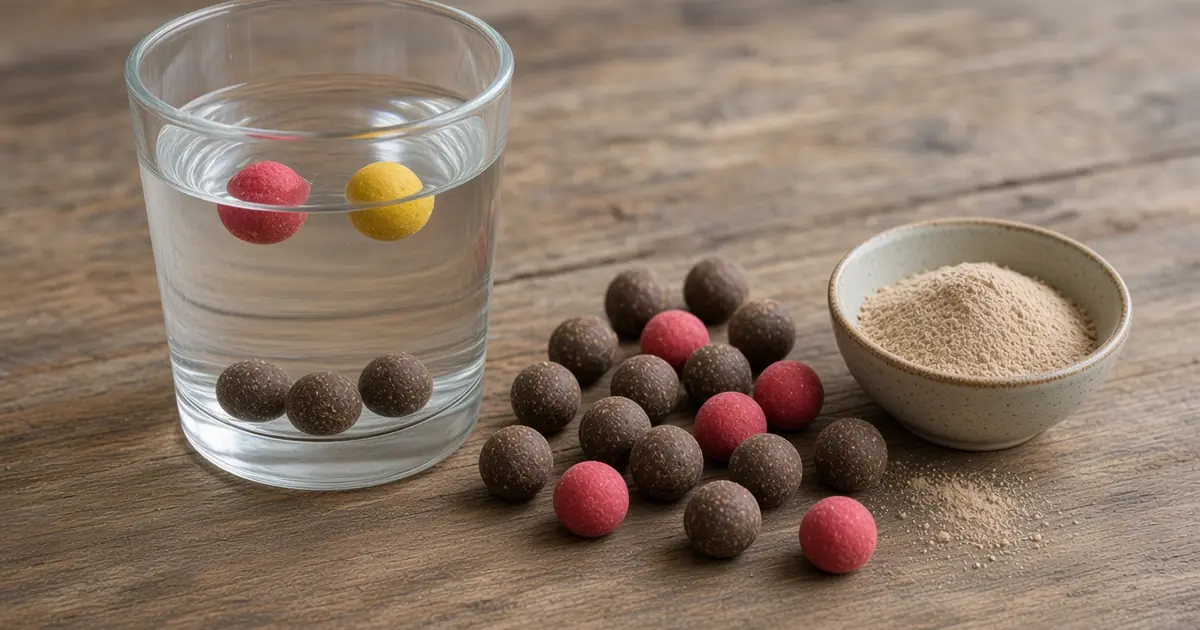
How to test buoyancy in a glass of water
Never take a pop-up to the lake without testing it first. A bait that floats in the kitchen for ten seconds can be lying flat on the bottom after a couple of hours in the water.
- Fill a tall glass with cold water, ideally close to the temperature of the lake you fish.
- Drop the baits in one by one. Good pop-ups come straight up and float high.
- Leave them overnight. Pick out anything that has sunk or is barely holding on.
- Thread a few onto a hair with your usual hook and check they still lift it.
- If you can, leave a couple in the glass for two or three days to see how long they last.
Baits that fail are not wasted. They go in with the freebies.
How to keep pop-ups floating for days
Most pop-ups that sink after a day were not dried enough or took on water through the skin. A few habits make a big difference:
- Dry them properly. Air-dry them on a tray until the skin is hard all round. Damp baits take on water faster.
- Keep the skin hard. A bit of egg albumen in a cork or pop-up mix gives a firmer outer layer that slows water getting in.
- Use a fine baiting needle. A big hole lets water straight into the middle of the bait.
- Go easy on long soaks. Soaking pop-ups in a dip or liquid for weeks can make them heavier. Test a dipped bait in water before you trust it.
- Store them dry. Keep them in a sealed container or in the freezer, away from damp.
- Swap the hookbait. On long sessions, put a fresh pop-up on each time you recast rather than trusting one that has been out for days.
How to match pop-ups to your freebies in colour and flavour
Some anglers want the hookbait to look and smell like the freebies around it. Others want it to stand out. Both are fair approaches, but decide which one you want before you roll, because it changes the recipe.
For flavour, use the same one as your freebies. Liquid flavours such as a flavour concentrate are listed in the ingredient library at 2-10 ml per kg of dry mix, with 5 ml/kg a typical dose. Many anglers go a little stronger on the hookbait, but stay inside that range, because too much can make a bait less attractive rather than more.
For colour, cork dust and many pop-up mixes come out paler than a fishmeal freebie. A pinch of powdered bait dye closes the gap. The library range is 0.5-3 g per kg of dry mix, around 1 g/kg typical. Compare the colour once both baits are dry, as most baits change shade while drying. If you want a bright pop-up instead, use a strong dye but keep the flavour the same as the freebies.
Note: Smell matters more than colour when matching. A pop-up that looks right but smells of a different flavour does not match your freebies.
Common pop-up mistakes and how to fix them
- The baits float in the kitchen but sink overnight. Dry them for longer, use a smaller needle and do a longer glass test.
- The cork paste crumbles when rolling. Too much cork or too little binder. Cut the cork back a little or add a touch of egg albumen.
- Microwaved baits are burnt or split. The bursts were too long. Use shorter bursts and check after each one.
- The hookbait is a different colour to the freebies. Add a pinch of dye and compare only once both are fully dry.
- The pop-up will not hold the hook up. The bait is too small or not light enough for the hook. Roll it bigger, add a touch more cork or use a lighter hook.
Pop-up checklist
- Pick the method: pop-up mix, cork dust or microwave.
- Use the same flavour as your freebies and decide whether you want to match or stand out on colour.
- Roll a small test batch first.
- Dry the baits until the skin is hard all round.
- Do the glass test overnight, with a hook on a few of them.
- Write down the amounts and times that worked.
- Store the good ones dry or frozen.
How BoilieFormula can help
A good pop-up starts with a freebie recipe you know well. In BoilieFormula you can build that recipe, see the percentages, estimated protein and cost per kilo, and save it, so the pop-up version always comes from the same mix. If you do not have a recipe yet, open the free Basic Fishmeal Mix template in the calculator and use it as your starting point.
The free plan gives you unlimited calculations and three saved recipes. Pro adds unlimited saved recipes, custom ingredients (handy for cork dust), extra recipe templates such as the Durable Hookbait Mix, and side-by-side comparison of recipe versions. See what Pro includes if that sounds useful.
Frequently asked questions
How do you make pop up boilies at home?
Use a pop-up mix, swap part of your own base mix for cork dust, or puff up baits from your normal paste in the microwave. Whichever method you use, dry the baits well and test them in a glass of water overnight before you fish with them.
How much cork dust do you put in pop-ups?
There is no single figure, and cork dust is not in the BoilieFormula ingredient library, so we do not give a range for it. Start with the amount your supplier suggests, roll a small test batch and add more only if the baits sink. Too much cork makes the paste crumble.
How long do you microwave pop-up boilies?
It depends on the microwave and the bait size, so there is no fixed time. Use short bursts of a few seconds, check after each one and stop when the baits have swollen a little and feel firm. Write down what worked for your microwave.
Why do my pop-ups sink after a few hours?
Usually they were not dried enough, the skin is too soft or water is getting in through a large needle hole. Dry them for longer, add a little egg albumen to firm the skin and use a fine needle.
Should a pop-up be the same flavour as the freebies?
If you want the hookbait to blend in, yes. Use the same flavour within the usual 2-10 ml/kg range and match the colour with a little dye. Some anglers prefer a bright pop-up that stands out, which is fine as long as the flavour still matches.
Final thoughts
Homemade pop-ups are not hard to make, but they need testing. Pick one method, roll a small batch, dry it properly and leave it in a glass of water overnight. Keep the flavour the same as your freebies and write down what worked, so the next batch comes out the same.
If you want your freebie recipe sorted first, put it into the free boilie recipe calculator and check the percentages before you roll.